
Month: June 2026

  • TBT: Exercises and Endnotes

    TBT: Exercises and Endnotes

    A Throwback Thursday post

    I can’t be the only person who starts reading a Pagan book, gets to an exercise in the middle of the chapter, thinks that I don’t have time to do the exercise right now, and either puts the book down, planning to come back later (and never do), or skips the exercise and reads on.

    (more…)

  • TBT: Fictional and constructed religions

    TBT: Fictional and constructed religions

    A Throwback Thursday post

    What can fictional religions tell us about real religions? Are constructed religions just as valid as ancient ones? What about real-world religions based on fictional ones? One impetus for creating constructed religions is for use in jurisdictions where religious activity is imposed by the authorities – but people often find that their joke religion then takes on a life of its own.

    (more…)
  • Indigenous resistance to AI

    Indigenous resistance to AI

    I was researching and writing a post about Indigenous people in tech when I discovered an amazing company called Animikii and their resources about data sovereignty and resisting generative AI (thanks to this article, Celebrating Indigenous Tech).

    (more…)
  • Indigenous History and the Land

    Indigenous History and the Land

    Vox Clamantis Books is located on the Haldimand Tract, part of the traditional territory of the Mississaugas of the Credit. So let’s unpack what that means.

    (more…)
  • TBT: Imagining Other Possible Worlds

    TBT: Imagining Other Possible Worlds

    A Throwback Thursday post

    Science fiction, particularly the writings of Ursula le Guin, explores hypothetical alternative societies, cultures, futures, and histories. I am currently watching Babylon 5 again on DVD, and would highly recommend it as an exploration of what happens when a totalitarian and xenophobic government takes over, and how people come together to resist.

    (more…)
  • Ethical dilemmas around religious exemption

    Ethical dilemmas around religious exemption

    In a previous post, I looked at the possibility of being granted a religious exemption from using AI. This raises a possible dilemma: if people of conscience can get religious exemptions from harmful activities like war and other forms of causing suffering to others, how is that different from allowing bigots to opt out of registering same-sex marriages, or baking a cake for same-sex weddings, or allowing anti-vaxxers to opt out of getting vaccines?

    (more…)
  • Religious Exemption from using AI

    Religious Exemption from using AI

    If you have an ethic of avoiding harm to the environment and other people, AI and its associated requirement for data processing centres which guzzle water and electricity, and slave labour (or very poorly-paid labour) to mine the minerals needed for the devices it runs on, definitely qualifies as the sort of harm that we would wish to avoid.

    (more…)
  • Filtering out AI

    Filtering out AI

    For people who want human-made art and writing in their search results, it’s getting harder to distinguish between AI and human-made, as large language models “learn” to generate productions that look more like human language and art.

    (more…)
  • Human Intelligence

    Human Intelligence

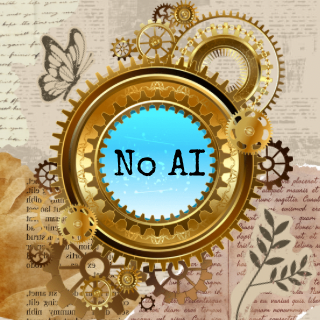
    Artist and author Mickie Mueller has created a “human intelligence” digital badge for art and writing, to make it easy to distinguish between human-produced art and AI-generated stuff.

    Here’s the elevator pitch: It’s a badge free for human creators to add to their social media posts of all kinds that helps everyone know at a glance that this is a human made creation, not made by AI.

    (more…)
  • AI and consciousness

    AI and consciousness

    When I was a kid and artificial intelligence (AI) was firmly in the realm of science fiction, asking whether AI could become conscious seemed like an interesting philosophical problem, but mostly irrelevant. Why did the Butlerian Jihad destroy all “thinking machines”? Why did humans hunt the androids in Do Androids Dream of Electric Sheep? The AI and robots of older science fiction stories are generally presented as benevolent but misunderstood, or on a different trajectory from humans (as is the case in Ursula Le Guin’s Always Coming Home, where the AI has retreated from earth and lives on Earth’s artificial satellites).

    Now that something like AI has been created, in the form of machine learning (ML) and large language models (LLMs), some people have already started to believe that it could become conscious, or that it is already conscious. Some people find this fascinating, others find it creepy.

    (more…)