
By Ben Valentine and Vincent Callebaut *
In the news, the state of the planet is doom and gloom: yet another species is driven to extinction, another wildfire destroys another unprepared city, and some of the strangest weather patterns break another record. Scientists and policymakers are depressed, and our collective consciousness turns to scenes of apocalypse, not narratives of recovery.
Welcome to the Anthropocene, the period in which human activity exerts a dominant influence on the Earth’s environment and climate, with terrifying results.

What is Solarpunk?
Solarpunk is the first creative movement to consciously and positively respond to the Anthropocene era. While no place on Earth is free from humanity’s hedonism, Solarpunk argues that humans can learn to live in harmony with the planet again.

Solarpunk is a literary movement, a hashtag, a flag, and a statement of intent for the future we hope to create. It is a fantasy narrative in which all humans live in balance with our finite environment, where local communities thrive, diversity is embraced, and the world is a beautiful green utopia.
In an article in The Guardian, author Rebecca Solnit reflects on the disproportionate impact of climate change on the world’s poorest communities. She writes: “Climate change is a global violence against places, species and people. By giving it a name, we can begin a real conversation about our priorities and values. Because the rebellion against brutality begins with a rebellion against the language that hides that brutality.”
If climate change is a slow violence in the Global South, then Solarpunk represents peace.
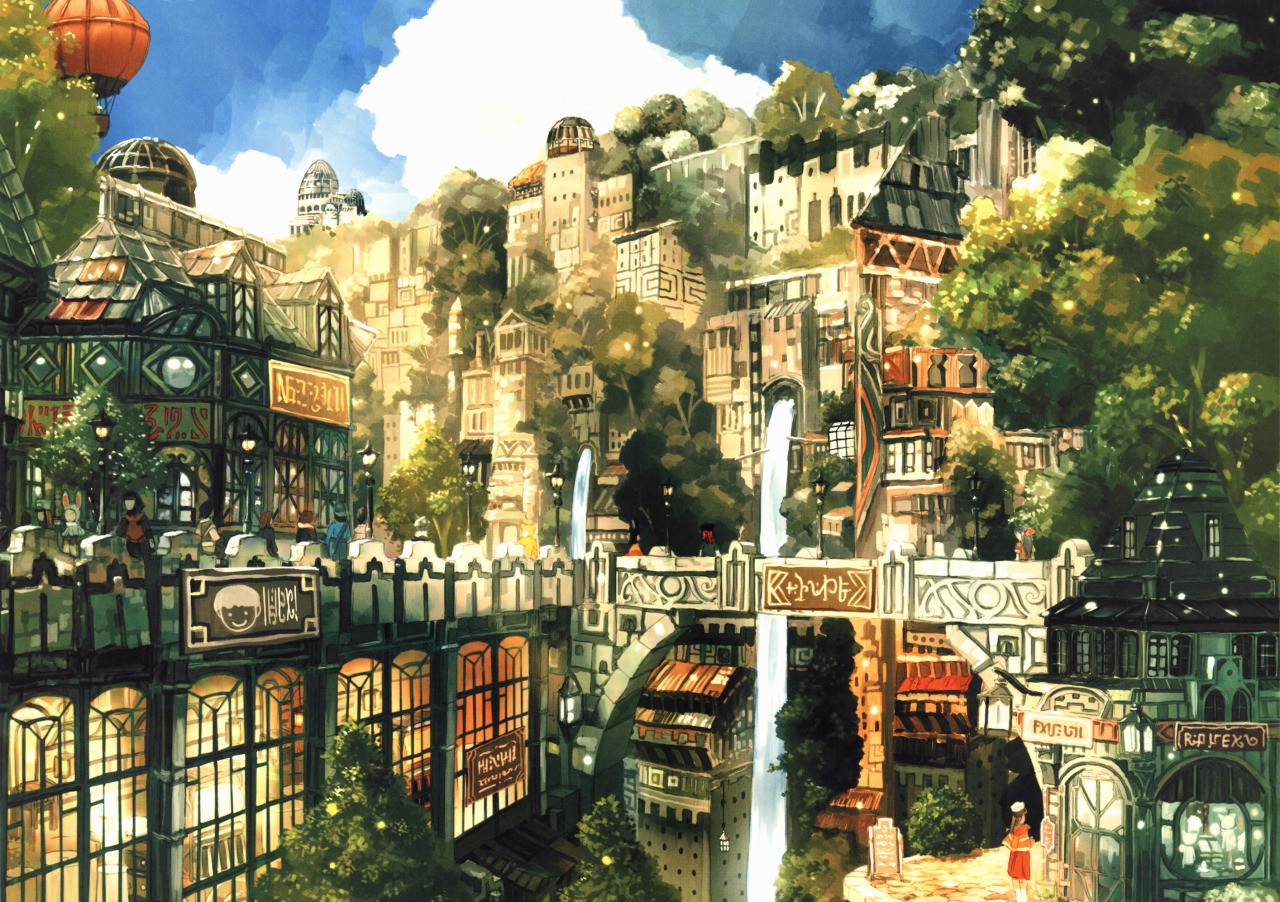
A sunny disposition
The “solar” in Solarpunk is both a description and a metaphor for the movement’s commitment to a utopia that is accessible to every person on earth, as well as to all life forms on our planet. No business can capture and privatize sunlight to harvest for itself or sell for a price. It is one of the only universally accessible goods. Solarpunk envisions a world of distributed clean energy, available and beneficial to all.
“The redistribution of power, whether political or electrical, is at the heart of my story,” says Solarpunk author Alia Gee in Hopes & Fears. “Taking care of the issue of power is, I believe, the only way we can have a better future for everyone (I emphasize “for everyone.” Not just for white males, cisgender people, or anthropomorphic life).”
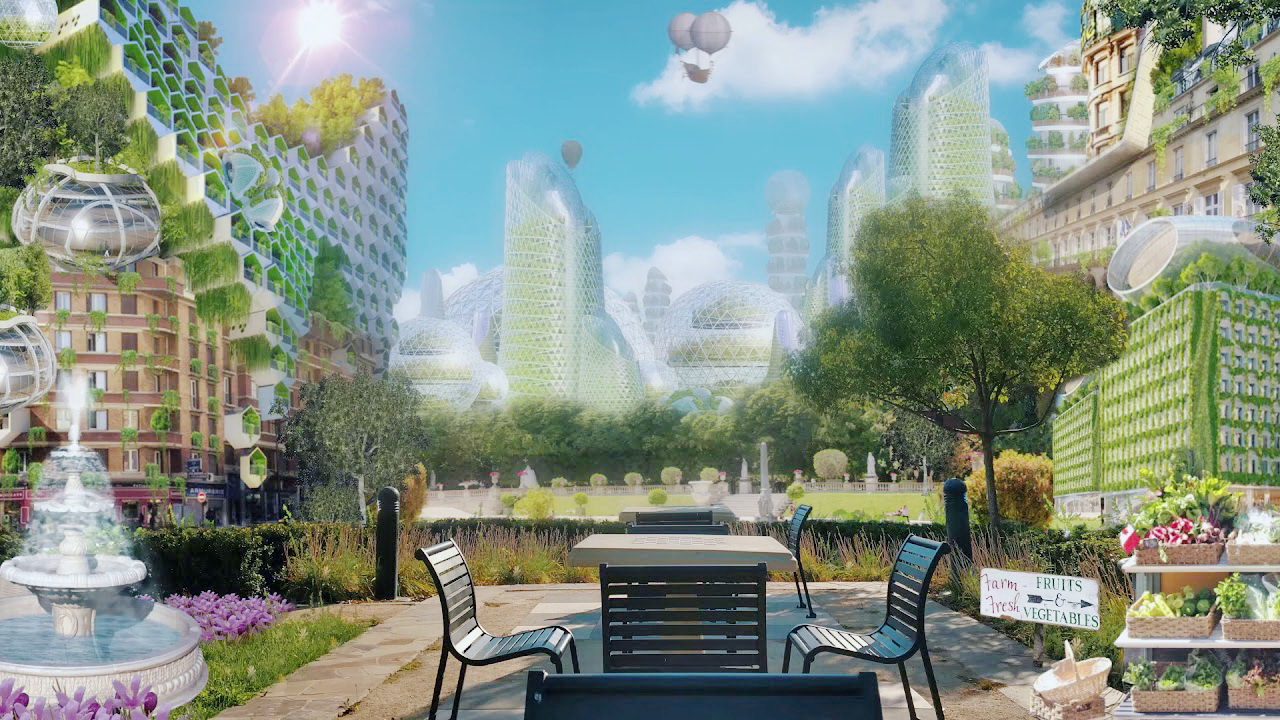
In this way, Solarpunk focuses on alienated and marginalized groups, because it has to.
Those with the least access to power, by today’s standards, will be the ones who need to be listened to most carefully if we want the dream of Solarpunk to become a reality. Because for this to be sustainable, it is necessary to distribute power and infrastructure across all independent communities.
Traditionally, science fiction—like stories in general—celebrates heroes who are proud, intelligent, and physically strong men. Post-apocalyptic fiction, where anyone with the slightest difference or difficulty is clearly considered a “useless burden,” is inherently biased. So while Solarpunk at first glance seems to focus on technologies that contribute to the creation of green utopias, the most important part of the movement is concerned with the real human challenges of living together on this planet.

This is likely based on the Solarpunk belief that the technology we need for a utopia is already here, we just haven’t found the political will to implement it yet.
As Solarpunk author Claudie Arseneault points out in Hopes&Fears, what makes Solarpunk so powerful is that it “uses existing technologies, things that we already know are possible.” Arseneault believes that “Solarpunk is a genre that’s about what our future should look like and how we can get there . That’s fantastic.”
The burgeoning movement takes a stand against the darkness of today’s overly popular apocalyptic science fiction, offering instead a bright future. The “punk” element, of course, references and builds on the two literary genres that preceded it: Steampunk and Cyberpunk. Rather than looking back in time and relying on outdated technologies like steam power, Solarpunk uses the best technologies available today. And, rather than imagining dystopian futures of organized crime and surveillance, Solarpunk is realized in an existing community.
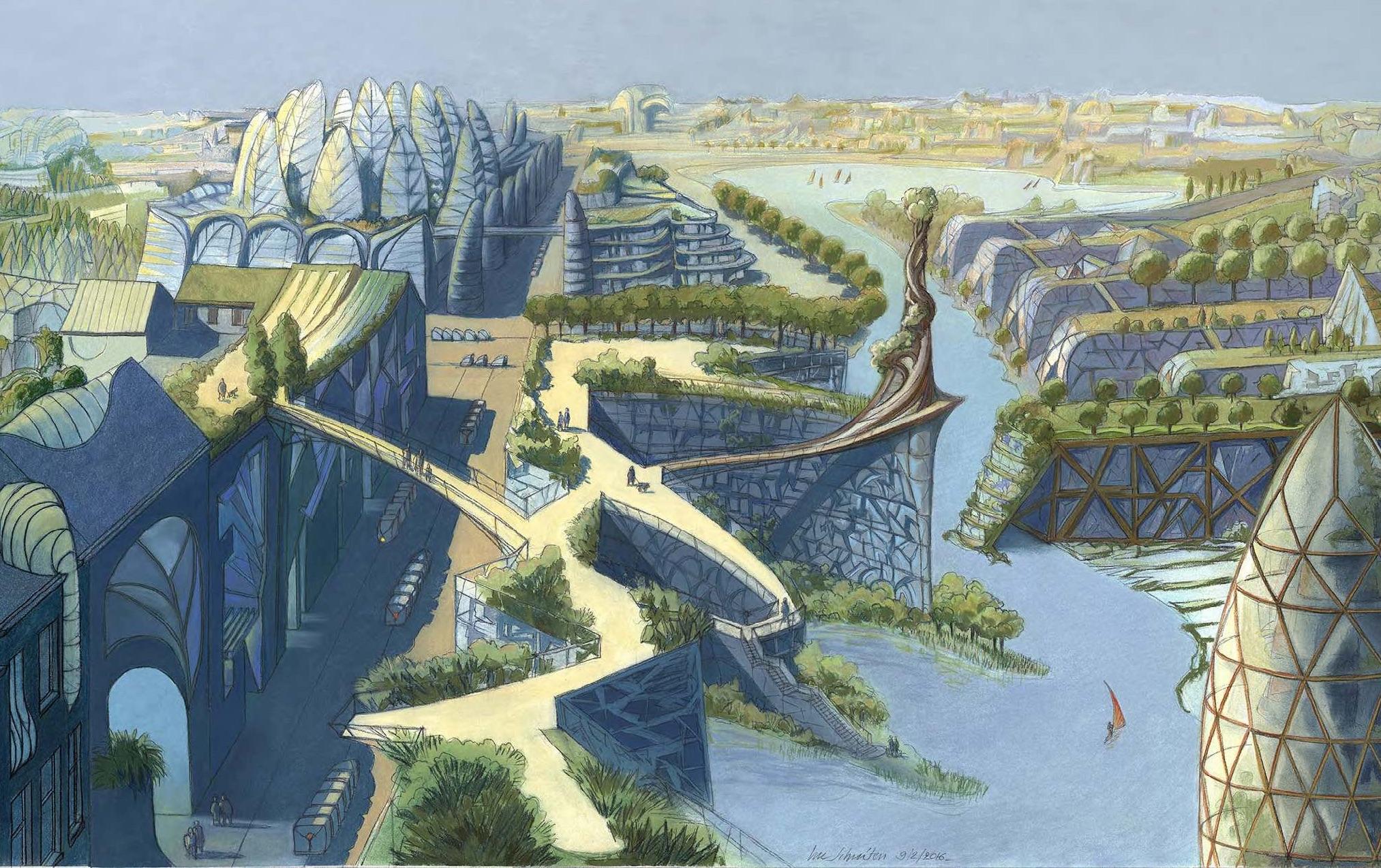
So what’s so “punk” about hugging trees?
So what is the “punk” in Solarpunk? “It is easier to imagine the end of the world than the end of capitalism,” says Mark Fisher, author of Capitalist Realism. Is There No Alternative?, quoting Fredric Jameson. Stopping or reversing the massively funded ship that is sinking is nearly impossible, and that is precisely the challenge of most environmental groups.
The most powerful people in the world rely on the status quo. Fighting against all the momentum and money invested in environmental destruction is one of the biggest battles imaginable… In other words, it’s super punk.
These battles are already raging. There are legal battles that are blocking sustainable technology and scaling up. Florida’s conservative government is cracking down on citizens who choose to live off the grid, Australia is undermining the benefits of home solar, and Spain is trying to “tax the sun.” American environmental activists are even being labeled and treated as terrorists.

While every reasonable person must admit that we are overheating the planet, many disagree wildly about the details. Timelines vary drastically, how bad the news actually is is constantly changing, and what we can do to reverse the issue has been hotly debated. Some say that “of course we can reverse it completely,” while others believe that we can’t, that the apocalyptic momentum is so strong that it is “unstoppable.” Many scientists believe that talking about how bad the world really is is not even productive. What’s more, they are repeatedly silenced when they do.
Most of today’s science fiction is dystopian; we cannot delve into creating a stable society in which we coexist peacefully with each other or with the material realities of our planet.
“Solarpunk is a genre whose time has come,” says Solarpunk author Sheryl Kaleo in Hopes&Fears, “it has the artistic and literary power to push us beyond our cultural catastrophism and make us believe in the future again.”

In the West, we have grown so comfortable with consumerism that even imagining what our lives might look like in a carbon-neutral society is considered a failure. It is easier for us to imagine a “reset button,” a collapse, a major natural disaster, or great losses, than a steady transition toward sustainability.
While it’s important to tell these stories, prominent solarpunk thinker Adam Flynn believes that simply envisioning an apocalyptic future is dangerous. “They leave the reader to return to their daily lives without any sense of urgency or imperativeness to prevent it from happening.” Flynn fears that people will simply give up.
What does a planet without a plan mean?
The real question facing humanity today is how to feed, house, and build a life for over seven billion people that is both comfortable and sustainable. Pessimists say that this is impossible. A sense of a global community, where all living creatures are treated as neighbors, will not come easily, but perhaps literature and art can help.
“Solarpunk,” Flynn adds, “is about creating a sense of a greater entity beyond ourselves and erasing the perception of the world around us as something separate from us, which is there for us to exploit.”
It aims to inspire and motivate everyone for immediate action.

Although there are many books that fall into the Solarpunk genre, the term predates any specific literary or artistic movement.
Apart from some active Solarpunk users on Tumblr , the most notable publication of the genre is the Solarpunk anthology . The anthology’s editor and science fiction writer Gerson Lodi Ribeiro himself told Hopes&Fears that “it is difficult to imagine the survival of humanity for the next hundred years without leaving fossil fuels behind and switching to renewable energy sources.”
For now, Solarpunk is more of a political fantasy or a statement of intent than a specific body of work. However, like Solnit, Solarpunk believes in the power of words. The term Solarpunk is a call to embrace a green utopian vision and combat the slow but relentless global violence that Solnit denounces. Similarly, Ribeiro continues, “Solarpunk’s narratives show its readers that it is possible and reasonable to conceive of a civilization free of pollution, waste, and global warming.”
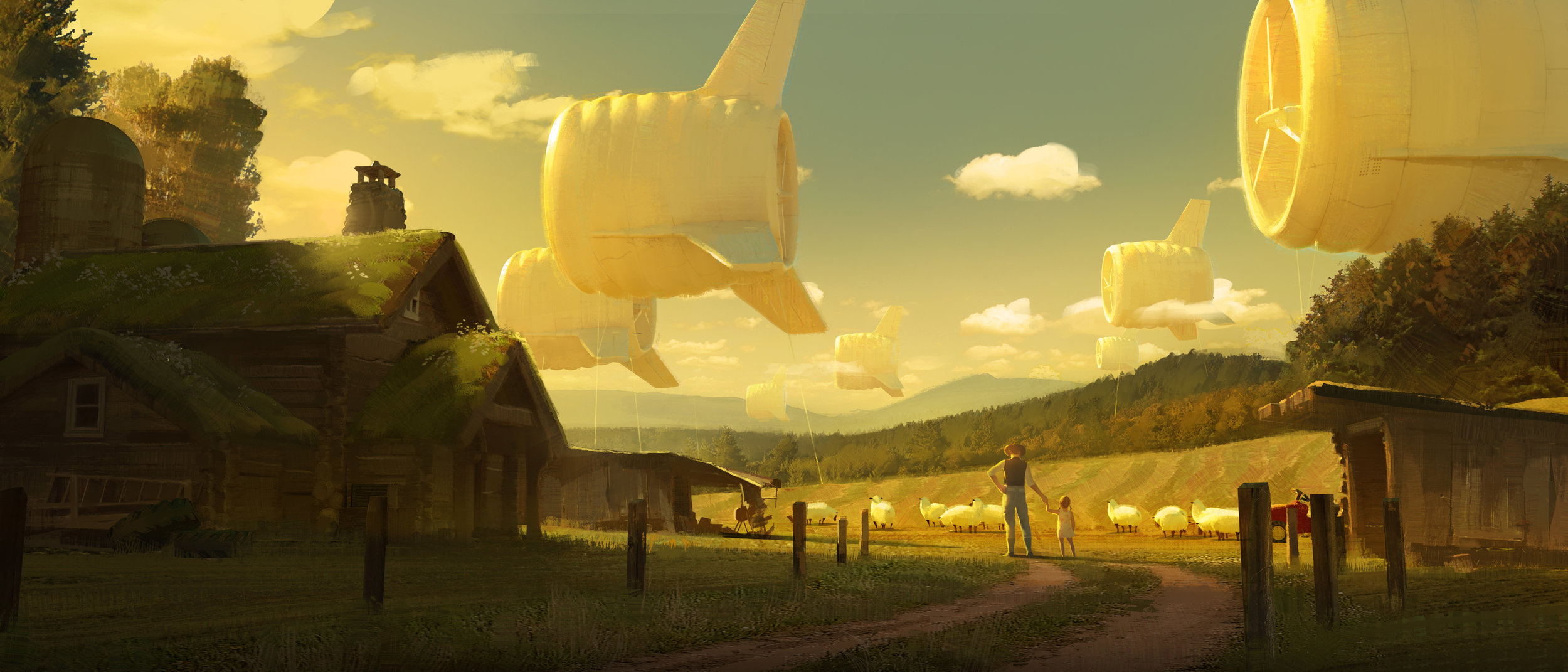
Several works are rapidly being added to the Solarpunk genre, and larger projects are being put together. Flynn is working to move beyond the conceptual level and is already planning some kind of Solarpunk publication in the near future. There are some pieces of a Solarpunk Press, which has already started accepting submissions. Arseneault has just announced the composition of a Solarpunk dragon anthology, which she is co-editing.
Scholar Donna Haraway, who has published extensively on environmental issues, writes that it is now imperative to create sanctuaries where all animals can find refuge. Haraway writes: “Our job is to make the Anthropocene as short/light as possible… Right now the Earth is full of refugees, human and non-human, without asylum.”
Can the Solarpunk movement create a literary and aesthetic narrative that will evolve into a natural refuge for all refugees, human and non-human, of today and tomorrow?
Can Solarpunk be such a refuge?


The “-punk” ancestors of SOLARPUNK:
CYBERPUNK
The king of the “-punk” science fiction subcultures. Coined by Bruce Bethke in his short story of the same name. The subgenre focuses on dystopian futures and alienated loners battling the powers that be in technology-heavy worlds. Neuromancer is a pretty substantial example, as is Blade Runner .
STEAMPUNK
A genre that is very similar to Cyberpunk but incorporates neo-Victorian influences and advanced technology powered by steam. Examples include The Difference Engine and The League of Extraordinary Gentleman .
DIESELPUNK
Similar to Steampunk but focusing on the aesthetics of the period between World War I and World War II, when diesel dominated the power of the most advanced engines. Examples: The Rocketeer , Bioshock .
DECOPUNK
The shinier, chrome-plated version of Dieselpunk that is more influenced by Art Deco and Streamline Moderne styles. The Batman animated series and Bioshock: Infinite fall into this category.
ATOMPUNK
An aesthetic heavily influenced by the Space Age and Atomic Age styles of the Sputnik era and the Chernobyl meltdown. Many post-apocalyptic films and the Fallout video game series are examples.
BIOPUNK
Contrasts with its related “-punk” derivatives because it looks to the future for its style. It imagines achievements in bionics and body modification. Examples: Never Let Me Go, Donna Haraway’s Cyborg Manifesto , some works by David Cronenberg.
NANOPUNK
A subgenre of Biopunk that focuses on the legal limitations of biotechnology and the spread of nanotechnology. Examples: The Diamond Age and Metal Gear Solid 4: Guns of the Patriots.
DREAMPUNK
While most derivatives of “-punk” focus on fantasy and sci-fi technologies, Dreampunk deals with the logic of dreams and an unassuming flow between the unconscious and real life. An example is the work of David Lynch and Lewis Carrol, Paprika.
* Vincent Callebaut is a multi-award-winning architect based in Paris. He is considered the best eco-utopian architect who can create fantastic projects that address global environmental and social ills.

Leave a Reply